why pay floors don’t kill incentives
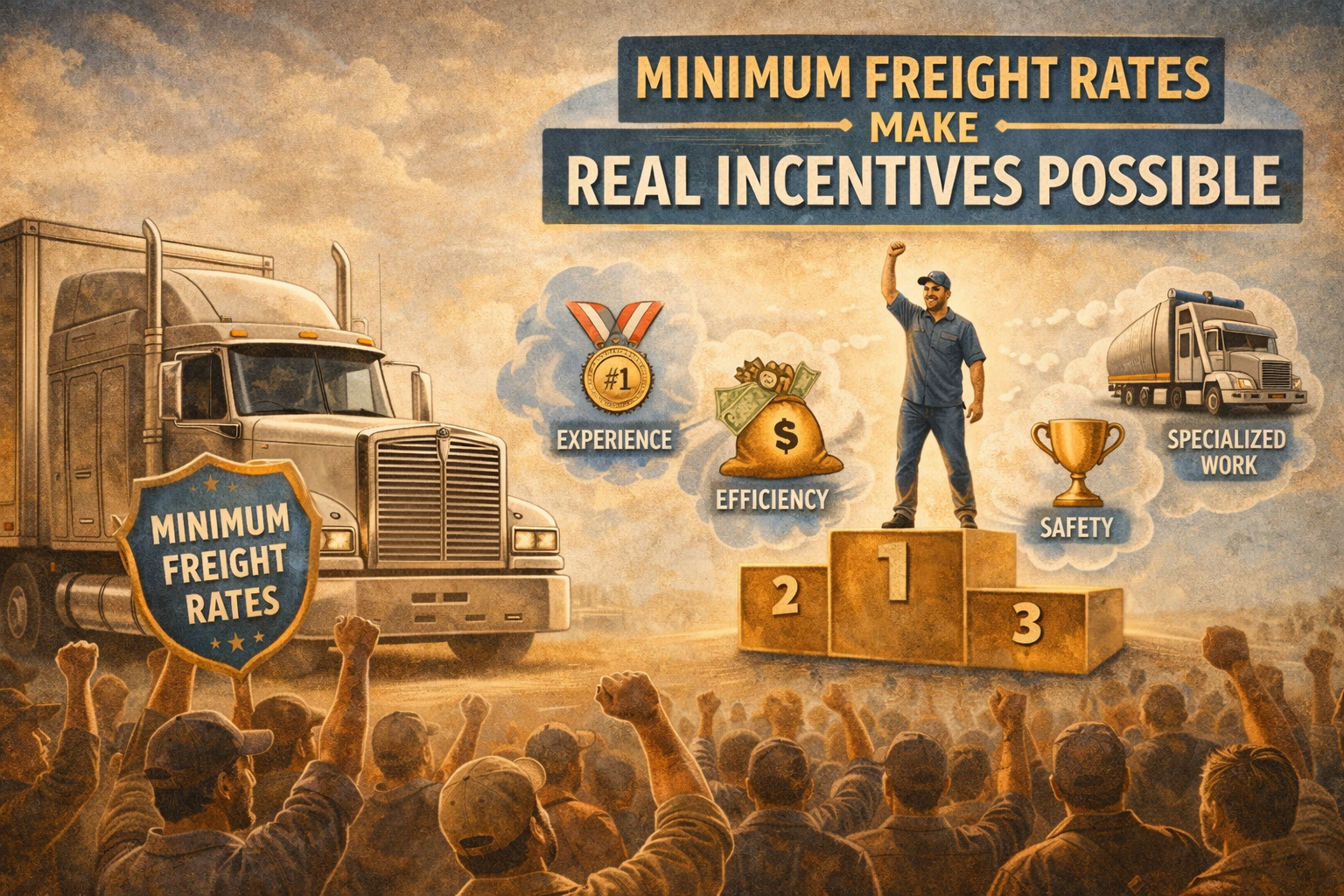
Pay Floors Don’t Kill Incentives
They Create Them
One of the biggest myths in trucking is this:
“If you set a pay floor, people will stop trying.”
That sounds logical — until you look at any other skilled profession.
In reality, incentives only work after survival is guaranteed.
Trucking Runs on Survival Mode — And That’s the Problem
Right now, trucking isn’t competitive in a healthy way.
Drivers and small carriers aren’t competing to be better.
They’re competing just to stay alive.
When rates don’t cover:
Real operating costs
Basic living expenses
People don’t plan long-term. They react.
Safety gets cut
Corners get shaved
Bad loads get taken
Desperation drives decisions
That’s not professionalism. That’s survival mode.
No Other Skilled Trade Works Like This
Think about it.
No one tells a:
Doctor
Electrician
Pilot
Engineer
…that they should work below survival pay to “prove themselves.”
Yet trucking demands professionalism without professional stability.
That’s backwards.
A Pay Floor Is NOT a Pay Ceiling
Let’s be clear.
A pay floor:
Does not cap earnings
Does not erase experience
Does not kill ambition
What it does is remove panic.
And once panic is gone, incentives finally work the way they’re supposed to.
What Happens When the Floor Is Raised
When survival is guaranteed:
Experience matters again
Efficiency gets rewarded
Safety becomes a competitive advantage
Specialized work pays more
Long-term thinking returns
You can’t reward excellence in a system built on desperation.
This Is About Dignity, Not Handouts
A minimum standard isn’t about who “deserves more.”
It’s about making sure no one is forced to accept less than dignity just to keep moving.
Pay floors don’t kill incentives.
They’re the foundation that makes real incentives possible.